A PR box has two quiet ways to fail that have nothing to do with the logo on the lid: it can arrive rattling and dented, or it can cost far more to ship than the product inside is worth. Both trace back to the same overlooked spec — how big the box is and what holds the product in place. Brands pour attention into foil and color and then default to an off-the-shelf box that is an inch too big in every direction, and pay for that inch on every single mailer. Getting the size and the insert right is the difference between an unboxing that lands and a campaign that leaks money on freight and breakage.
Carriers bill you for the air in the box
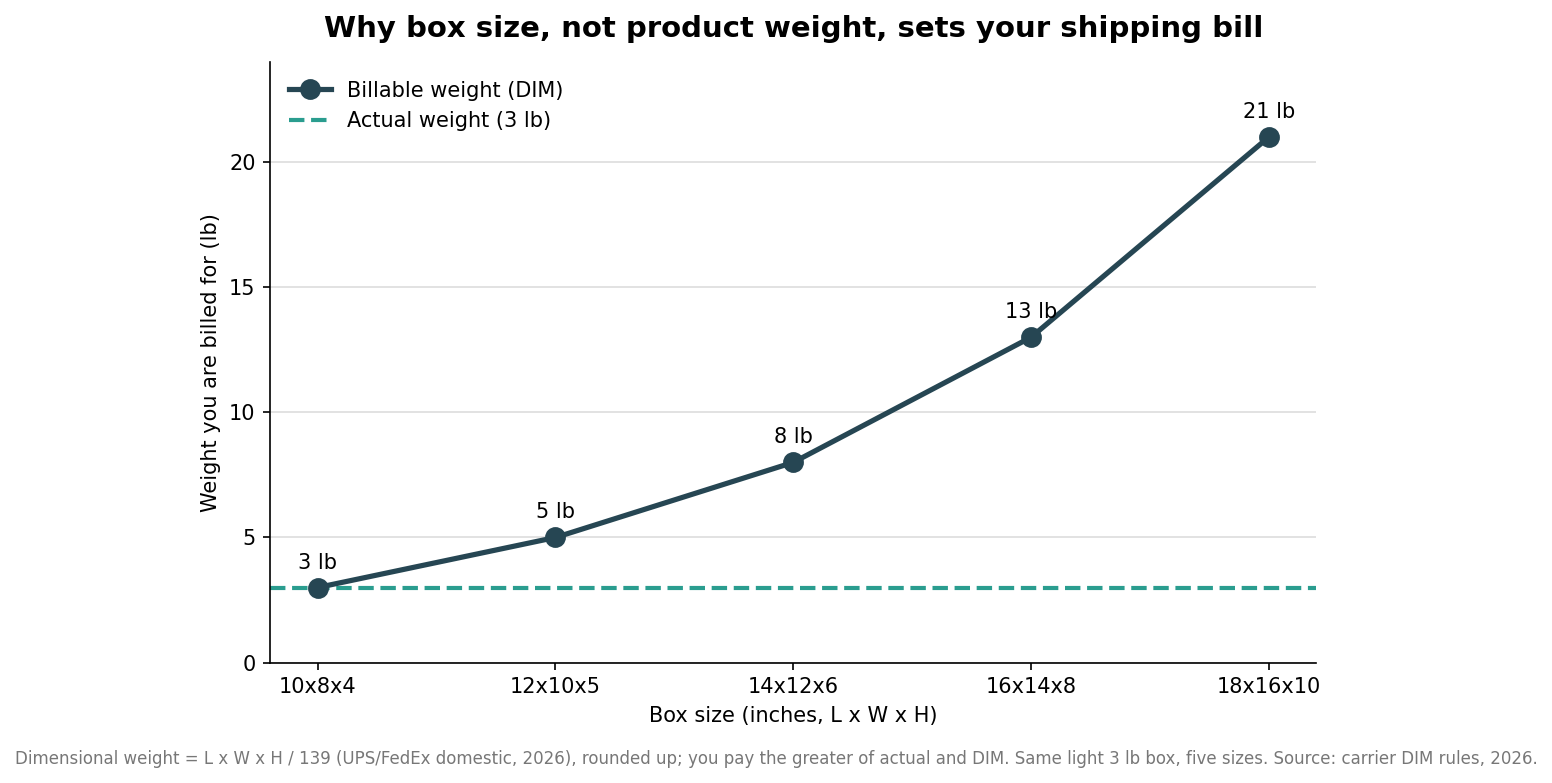
Shipping is not priced on weight alone. UPS and FedEx bill on dimensional weight, and for domestic parcels in 2026 the formula is length times width times height divided by a divisor of 139, with every fractional inch rounded up to the next whole inch before the math is done. Your invoice uses whichever is larger, the actual scale weight or that dimensional figure. The gap can be brutal: a light 7-pound box measuring 24 by 18 by 12 inches works out to 5,184 cubic inches, which divided by 139 and rounded up is 38 pounds — so you are billed for 38 pounds to ship 7, roughly a 440 percent penalty for empty space. Influencer boxes are usually light and pretty, which is exactly the profile that gets punished by dimensional weight. The cardboard is not heavy; the volume is what you are paying for.
Right-size the box before you decorate it
The fix is unglamorous and highly effective: size the box to the product plus its protection and nothing more. Measure the tallest, widest arrangement of what goes inside, add just enough clearance for the insert and a snug fit, and resist rounding up to the next standard size out of habit. A box that is one inch smaller in each dimension can drop you a full billable pound or two per parcel, which compounds fast across a few hundred mailers. Right-sizing also improves the reveal — a product that sits firmly in a fitted box reads as considered and premium, while one swimming in void fill reads as an afterthought. Decide the internal dimensions first, from the product outward, and let the outer box and its artwork follow. Designing the pretty box first and then forcing the product to fit is how brands end up oversized on both cost and impression.
The insert decides whether it survives — and how it feels
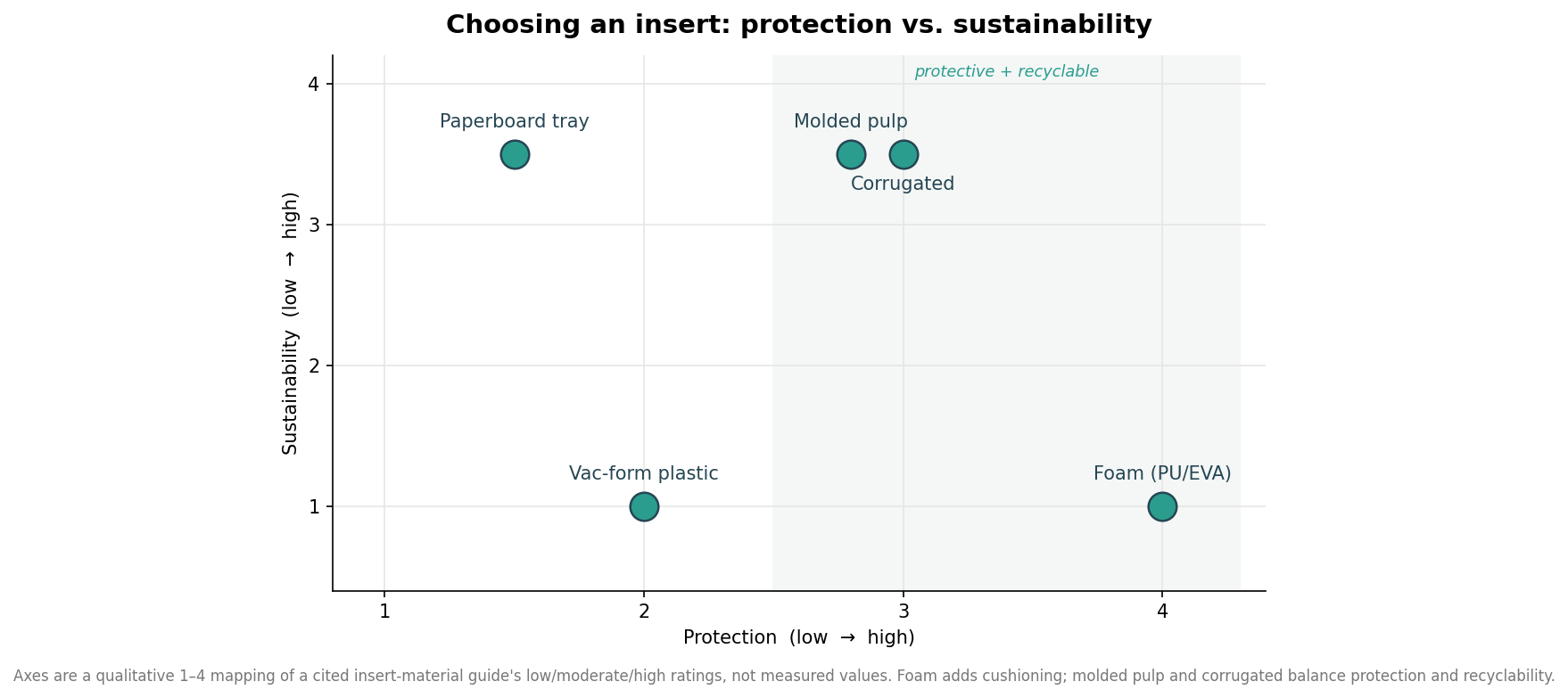
Once the box is sized, the insert does two jobs at once: it immobilizes the product so it survives transit, and it stages the product so the opening moment works. The common materials trade off protection, presentation, sustainability, and cost differently. Foam inserts (PU or EVA) give the best shock absorption and are the safe choice for glass bottles, serums, and fragile cosmetics, but they are plastic-based and not recyclable. Molded pulp offers a precise, rigid cradle from recycled fiber with strong sustainability credentials, at the cost of a mold fee that only makes sense at volume. Corrugated inserts use fluted cardboard to absorb impact, recycle cleanly, and suit heavier or more fragile items. Paperboard trays look the most premium and print in full color, but offer only light protection and are best for organizing lightweight items rather than shielding them. Vacuum-formed plastic is cheap and moldable but middling on both protection and eco-credentials.
Match the insert to the product and the brand story
Let the contents and the brand’s values pick the material. A single glass fragrance bottle or a breakable compact wants foam or a well-designed molded-pulp cradle that holds it away from the walls. A set of light, unbreakable items — sachets, a printed card, a soft good — is better served by a printed paperboard tray that turns the interior into part of the design. Anything heavy, or anything that will see rough handling on its way to a creator’s doorstep, benefits from corrugated’s impact resistance. And a sustainability-forward beauty or wellness brand should lean toward molded pulp or corrugated, because a plastic foam insert undercuts the exact message an eco-conscious PR box is trying to send. Remember that molded pulp and custom foam carry one-time tooling or mold costs; those amortize well over a few hundred units but can dominate the budget on a tiny run, so weigh the insert choice against how many boxes you are actually sending.
Test the packed box, not the empty one
The last step protects both the product and the P&L, and almost nobody does it: pack a real sample exactly as it will ship, seal it, and put it through the trip. Ship one to yourself across the country and see how it arrives, and while you have it, run the dimensional-weight math on the final packed dimensions before you commit to a size. A ten-minute drop test and a quick DIM calculation on a single sample catch the two failures — breakage and freight surprise — that otherwise reveal themselves only after you have printed and packed the entire run. Build the box from the product outward, choose the insert for the contents rather than the catalog, and confirm both with one packed sample, and the campaign spends its budget on the moment the creator opens the lid rather than on air and apologies.
Leave a Reply